
Cider and Perry Month
July is Cider and Perry Month!
CAMRA supports and campaigns for cider and perry throughout the year, and we spotlight it with celebrations in July.
Why July?
Real cider and perry are generally seasonal products that can only be made when fruit is ripe. This means production of these drinks are tied to a natural cycle of the apple and perry pear trees found in orchards around the UK.
But the celebration of these fantastic drinks is an all-year-round event, often enjoyed best when the sun is shining, picnic baskets are being prepared, and locals are serving the finest real cider and perry during their busy summertime peak.
Independent cider and perry makers produce some of the best quality drinks in the UK. We hope consumers can help us champion producers by ordering a pint of #NotFromConcentrate real cider or perry at their local this July!

Happy Cider and Perry Month!
Head to CAMRA’s events platform to find Cider and Perry Month events near you, submit your own event, or check out the timeline below for our pick of some of the largest cider and perry events taking place this July. Some tastings and events will need to be booked in advance so make sure to look ahead to avoid disappointment!
You can join the celebrations on social media too, just use the buttons below or search #NotFromConcentrate and #CiderandPerryMonth to find all the juiciest real cider and perry news.
CAMRA’s celebrations
Every July we release new online content throughout the month, celebrate the work of key producers and campaigners in the cider and perry world, and highlight some of the most exciting events organised by CAMRA branches or open to the public. Make sure to check back here during the campaign when to see everything that Cider and Perry Month has to offer!
July 1-7
 |
Minimum juice content In the UK, cider and perry can legally be made up of 65% water (HMRC’s tax law). Many campaigning groups are arguing for an increase in real juice content. We want at least 50%. Most industrial cider (the stuff that’s only 35% juice) is made using concentrates which are then chaptalised – in other words, more water is added than was originally taken out which oddly increases profit! Email your MP using our e-lobby to ask for a minimum juice content of 50% in real cider and perry. |
 |
 |
Supporting real cider and perry makers CAMRA is a major outlet for real cider, making real products available at our events. Why not find a cider and Perry festival run by CAMRA? |
|
 |
Cider and perry must-reads Perry: A Drinker’s Guide explores the magical world of perry. Adam Wells created the world’s first dedicated and comprehensive guide to perry, with information on its troubled history, different pear varieties, how it’s made, plus even more. Gabe Cook’s Modern British Cider book explores cider’s new change in drinking landscape of Britain – the rise of ‘craft’ and modern, discerning drinkers with different needs, habits and spending opportunities. |
|
 |
Beer on the Wye/Cider on the Wye Herefordshire’s biggest beer and cider festival, 10-12 July 2026, is a ‘must-do’ festival for many. Over 130 different ciders and perries are in tip-top chilled condition every time a pint is served, with over 100 locally produced in Herefordshire, the festival will showcase the largest selection of Herefordshire draught ciders and perries ever assembled under one roof. Enjoy a wonderful laid-back atmosphere in a riverside meadow in the historic heart of Hereford, and experience the prestigious CAMRA West Midlands Cider and Perry competition. |
|
 |
Cider and Perry Pub of the Year Have you visited our Cider and Perry Pub of the Year? The Blackfriars Tavern is a Victorian corner pub offering over 20 local real ciders. The award recognises the best pub or club that promotes and encourages the sale of real cider and perry, after battling it out through four stages of the competition. |
|
 |
Wassailing An ancient Pagan ritual that is a living tradition taking place in mid-winter to bless apple trees before they are harvested the next season. Had it not been for folklore, remedies and songs, wassailing could have been forgotten. ‘Wassail’, obtained by Anglo-Saxon, means to be of good health, with respondents replying ‘drinc hael’ – drink and be healthy. Dance on the land, sing to the trees, light fires and make lots of noise to waken the trees so the sap begins to rise. |
|
 |
Apples Apples originate from Kazakhstan, where there is still an ancient forest of apple trees, although their fruit bears little resemblance to modern varieties, being small and hard. Modern trees come in all sorts of sizes but in good condition. Well established standards could produce about 300 litres of cider per year (2kg/litre). |
July 8-14
 |
Pears Pears originated in the Caucasus around 4,000 years ago with over 3,000 varieties. Perry pears, however, are only 400 years old, bred in England’s West country. There are only around 120 varieties, many of which are very rare. These trees, unlike apples, are very long-lived and equally take a long time to mature. It is said that you can plant an apple tree for your kids and a perry pear tree for your grandchildren. |
|
 |
Variety Depending on your source of reference, there are over 7,500 different apple varieties, and around 450 are used in cider making. Only a few, around 25, are used regularly. Similarly, there are only a handful of perry pears in common use. Technically you can make cider or perry from any variety, including eaters. Whether or not you want to drink it is another matter. |
|
 |
Alchemy Unlike beer where you can experiment making a new recipe as fast as your equipment allows, cider and perry makers, particularly craft makers, get one shot a year. As most fruit isn’t ready until the end of autumn or early winter, even the cold weather plays its part, making the process very much a labour of love for the cider and perry makers. |
|
 |
Luck Some time ago, an experiment was conducted to try and scientifically predict the quality of an apple crop, and therefore the cider, in any given year. They measured everything they could, even the type of insects visiting the flowers. It failed. There are just too many variables affecting the pollination and growth of fruit. Then there’s the weather where luck plays no small part. Cidermakers hold their breath to see what the season brings. |
|
 |
Skill One way round the alchemy and luck issues, mentioned yesterday, is the skill of blending. Historically, anything up to seven apple varieties were used, dictated by what was locally available. Year replication (like Strongbow’s) wasn’t easy until the modern era, even now it is only realistically available in industrial cider. |
|
 |
Style Neither cider or perry is just dry, medium, sweet or fizzy. Nor is it simply East or West country or somewhere in between. At some CAMRA festivals you’ll find them described as acidic (sharp), tannin and sweet. Some makers only use local apples, often their own. Others use all sorts. If you see PetNat on the label, it means it’s naturally slightly fizzy. There’s only one way to discover your preference – so get tasting. |
|
 |
Tannin For some, tannin is essential in cider as it gives it a more rounded mouth feel, typically associated with West Country cider. Perry pears can be full of it. Technically, it’s an immensely complicated chemistry more often associated with dryer offerings. Put simply, if you like tea, you’ll probably prefer a tannin lead perry, be it dry or sweet. In cider, the tannin element comes from cider apples grown for cider making. There’s simply more of them in the West Country than the East, where cookers and eaters dominate orchards. |
July 15-21
 |
International The UK is currently the world’s largest market for cider. The US is catching up fast. North-west Spain has a long tradition of cider making (protected by law), as does north-west France. Many other countries, as diverse as Norway and South Africa, have the terroir to grow apples, but their cider markets are yet to fully flourish. |
|
 |
Cider Duty Unfortunately tax and most alcoholic drinks are inseparable. In the UK, to be taxed as cider or perry, the product needs to be 8.4% or less ABV. Stronger ciders do exist, but they can be expensive as they are taxed as wine. Ice cider in particular, made using one of several special cold processes, produces a very fine drink at around 12%. |
|
 |
Cider Riots In 1763, a tax of 4 shillings per hogshead of cider was levied (£52 on 432 pints in today’s money). This resulted in riots, particularly in Wales and the West Country (where there were lots of MPs) the tax was dropped within three years. |
|
 |
Smashing Once the fruit has been washed (a bit of brown often doesn’t matter) here comes for many, especially children, the fun part, where you get to smash the fruit up, or more technically, mill or mash them. All sorts of wonderful gadgets have been created to help do this. Obviously scale matters, as does the mess if playing at home! One device often used is called a scratter, it’s got lots of teeth! It grinds the apple up into small pea sized pieces (pulp) that makes pressing easier to extract the juice. |
|
 |
Squashing Once the fruit has been smashed up into a pulp (or pomace) it needs to be squashed to get the juice out. On a smaller scale there are many ways to do this, usually involving layering the pulp up in a press. The resultant assemblies being known as a cheese of pulp wrapped in cloth. This starts a well-known culinary combination even before it’s finished. Once done with the cheese (pulp) it is often fed to the farm animals. |
|
 |
Yeast Yeast is clever stuff but it’s temperamental. There are several ways of starting fermentation, from natural with wild yeasts and an open barrel in a barn to adding specific industrial cultures into large vats. Like all living things, yeast requires good conditions to thrive (warmth and food). However, it can become what’s called stuck (not enough to eat). Modern techniques have resolved this issue. |
|
 |
Maturation Specifically Malolactic Fermentation (MLF). Once the early fermentation has calmed down a period of maturation is required. Good hygiene (sterilising vessels and keeping air out) is necessary as there’s a new bunch of faults that can occur. The cider maker can still alter the final product in this stage. There’s a fault that isn’t actually one – if so desired – malic acid, the sour flavour of green apples and apple sour sweets, can be converted by lactic acid bacteria to make lactic acid, a softer flavour. This softening process is common in the wine industry, cider makers are far more selective. |
July 22-28
 |
Blending The real art in cider and perry making is in the blending. The skill and knowledge of being able to taste an apple or pear in its raw state and predict how it turns out, and then the ability to balance it with other flavours to create a saleable, possibly award-winning product year on year is no small endeavour. |
|
 |
Storing Oxygen is both cider and perry’s worst enemy, particularly in a live craft product. If it gets in, it creates all sorts of havoc, usually resulting in vinegar (acetic acid). Storing in anything but a glass bottle has an inherent risk (even metal is permeable to a level), so once it’s open, drink it! Oddly good quality cider vinegar is often more expensive by volume than cider. Real cider and perry, unlike wine, can’t be kept indefinitely. Small subtle changes in its chemistry invariably leads to the release of oxygen and its eventual deterioration. Cider makers will use airlocks (bubblers) to ensure the fermenting gas can escape but air does not get in. |
|
 |
Pasteurisation and filtration Unlike real cider, industrially pasteurised and filtered cider can be kept for as long as it says on the container. The use of these processes or not (there’s more than one) can stir up emotions in craft industry. But the reality is if you want to keep it for any length of time you need to clobber it with tech. Keeping it real means drink it. Like keg beer, the stuff out of a fountain is dead. |
|
 |
Cider production Like many industries, cider is dominated by just a few large businesses. These produce the vast majority of the 700 million litres made annually, supporting 65,000 jobs and a lot of infrastructure (orchards and more). But, thankfully, there are around 500 cider makers in the UK, mostly small business. That’s a lot of ciders to try! |
|
 |
Keeving This process is centuries old, and, although in modern times has been more associated with French cider, it is happily making a comeback in the UK. It involves starving the yeast of nutrition by stopping the fermentation before all the natural sugars are used up, resulting in a light, often sparking, sweet cider. It is a more involved process but well worth doing. |
|
 |
Labelling This is a massive, complex, international, subject. The food you eat has to be labelled with all sorts of content and origin information. Alcoholic beverages don’t, but they go the same way! Many manufacturers don’t want to admit what they do. Most craft makers don’t mind, many are proud of their content and actively promote it. CAMRA actively supports consumer transparency. |
|
 |
Fine cider and perry Fine cider is most commonly associated with a 750ml glass bottle, also known as wine bottle. To some this is an anathema being just cider, and potentially not even that good of a cider, marketed as wine. Make it fizzy and put it in a champagne bottle, even better. But few can argue that these products are opening new and exciting markets for real cider and perry, and there are some truly excellent fine dining pairings supported by top chefs. |
July 29-31
 |
Bottles Most historians agree that bottles thick enough to withstand fizz pressures, along with corks from Portugal, were developed in England by Sir Kenelm Digby in the early 17th century (1630). This process, now known as ‘méthode champenoise’, was used decades before being adopted in France, to make sparkling cider. And it still is. |
|
 |
Packaging How your cider or perry is packaged, and correspondingly processed, can have a profound effect on the product you drink. It can be available in a variety of containers such as cans, crown cap bottles, corked bottles (champagne style), jugs with stoppers, key kegs, bag in box, through a handpull, dropped from a barrel, gas assisted from typically an aluminium firkin through a fountain (industrial pub stuff). All ideally need to be served at the right temperature (0-20 degree Celsius) for the product, which can depend greatly on the fizz and alcohol content. |
|
 |
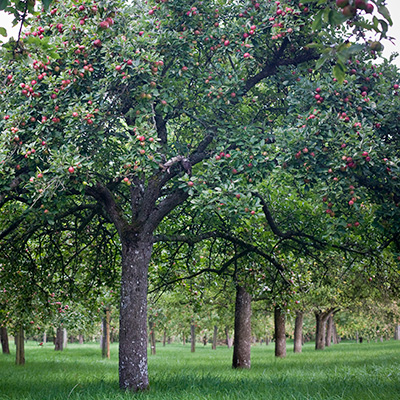
Orchards are protected habitats A study by the People’s Trust for Endangered Species revealed that 90% of traditional orchards have been lost since the 1950s. The Coppy perry pear variety was extinct until one singular tree was discovered. Traditional orchards grow taller trees than commercial orchards, with high levels of biodiversity – providing a home for a variety of wildlife and cider apple and perry pear varieties. Orchards are vital to our landscape, our humanity, and for the production of real ciders and perries loved by many. |
Find events near you
CAMRA branches, cider and perry makers, pubs, museums, and social clubs all run events to celebrate cider and perry throughout October.
You can see events that have already been submitted on our Events Map. If we’ve missed an event taking place near you that celebrates cider and perry this July, then let us know about it using the form on the events page and we’ll add it to the listings!
More resources
Are you new to the cider and perry world? Check out this short article that explains what exactly real cider and perry is, our definition of the two tasty drinks and why we have a definition in the first place.
Perry’s knight in shining armour, Adam Wells, visits Gregg’s Pitt perry pear orchard in the first of a two-part introduction to perry video series! Can’t get enough of this fantastic drink? Learn about perry making processes as Adam visits Little Pomona Orchard and Cidery in part two of the series
Cider writer Rachel Hendry discusses what makes a good harvest, including tips on orchard location, how to ensure cider fruit is set, plus seasonal tricks to look out for.